Thyroid Specialist in Melbourne and regional victoria
Specialist Thyroid Care from Diagnosis Through to Surgery
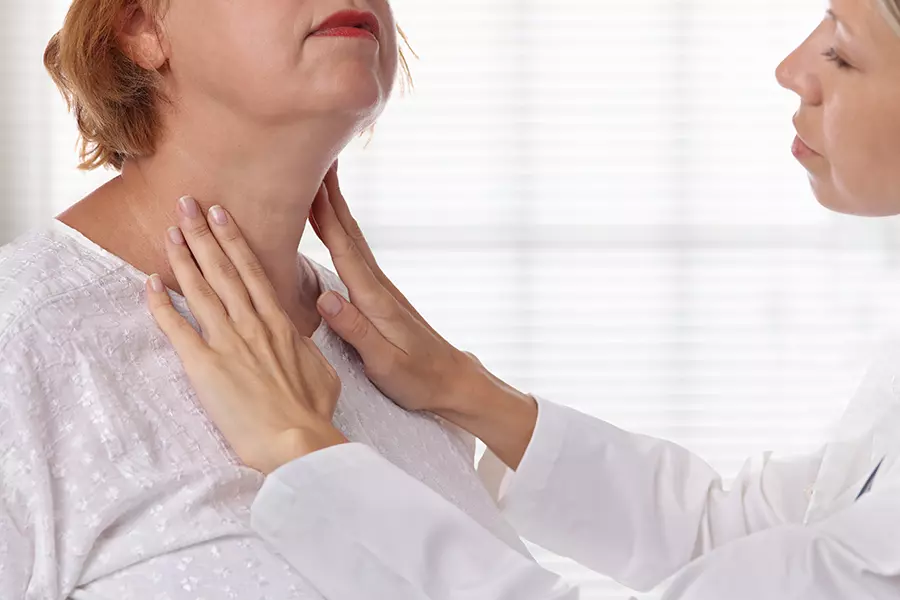
Our thyroid surgeon Dr Sam Flatman has completed a further sub-specialisation in advanced Head & Neck surgical oncology, thyroid and parathyroid surgery. On this page we will help you understand more about thyroid nodules, thyroid cancer, surgeon-performed ultrasound, goiter, thyroid surgery and thyroidectomy.
The role of the thyroid
The thyroid is a soft, butterfly shaped gland situated in the base of your neck in front of the trachea or ‘windpipe’. It has two rounded sections called lobes that are joined by a thin section called the isthmus. The thyroid releases hormones into the body that help regulate body functions relating to metabolism, growth and development.
When the thyroid is not functioning as it should, whether overactive, underactive, or affected by structural changes such as nodules or goitre, it can have a significant impact on your overall health and wellbeing.
If you are experiencing symptoms related to your thyroid, or have been referred by your GP, a thyroid specialist can assess your condition and recommend the most appropriate pathway for your care.
Contact Us
467 Upper Heidelberg Road,
Heidelberg Heights, VIC 3081
03 9998 7459
Thyroid Nodules and Thyroid Cancer
Thyroid nodules are solid or fluid-filled lumps that form within your thyroid and are extremely common. While thyroid nodules may be found during a physical examination of the neck, many are found incidentally through other investigations such as ultrasound, CT, MRI and PET scans.
Approximately 5% of all thyroid nodules are cancer. Most of these will be small papillary thyroid cancers where the survival rate is very high at 98-99%. Thyroid nodules should be approached at least initially with these facts in mind.
Increase in diagnosis of thyroid cancer
There has been an exponential increase in the diagnosis of thyroid cancer in high-income countries. This is due to patients having easy access to high frequency ultrasound, which is being performed often for unrelated conditions. Around 50% of thyroid cancers are estimated to be micro-papillary thyroid cancers that are less than 1 cm in size.
Typically these types of cancers would largely have gone undiagnosed and not have caused a clinical problem. Autopsy studies have shown that in some countries up to 30% of people have these small thyroid cancers that were never identified. Importantly, with this exponential increase in the diagnosis of thyroid cancer, the mortality rate from thyroid cancer (which is very low) has remained the same.
Thyroid nodule investigation
Facts such as these have tempered the investigation of thyroid nodules. Currently, the movement is toward more conservative investigation of thyroid nodules and more conservative thyroid surgery. For example, nodules less than 1cm in size are not recommended for investigation with ultrasound-guided fine-needle aspiration (US-FNA).
Furthermore, there is a movement toward ultrasound surveillance for confirmed, low-risk, small papillary thyroid cancers in properly selected patients who do not undergo any surgery at all. This is called active surveillance, for which there is now long-term evidence from trials in Japan and the USA, for example. There is a shift to streamline the patient process, limit over-treatment, reduce error and reduce patient morbidity.
The gold standard for the management and work up of thyroid nodules is set out in the ATA (American Thyroid Association) Guidelines. Our surgeons are up to date with these guidelines and manage patients accordingly.
Surgeon-performed ultrasound for thyroid nodules
The workup of thyroid nodules to rule out cancer includes ultrasound and US-FNA. Surgeon-performed ultrasound (where the specialist surgeon performs their own dedicated ultrasound on the patient in the office) has been shown to change the surgical management in nearly half of patients with thyroid cancer and is performed internationally by thyroid experts.
It also allows the surgeon to perform immediate US-FNA on the same day as the consultation, and has been shown to streamline diagnosis while decreasing the number of appointments, travel, costs and stress for patients.
Finally, evidence has shown that patients have better outcomes and less complications when treated by high-volume thyroid surgeons.
Goiter – enlarged thyroid glands
A thyroid goiter is an enlarged thyroid gland. This can result from different causes, including iodine deficiency, autoimmune thyroid disease, genetic conditions and thyroid nodules. Most goiters are actually benign.
In many instances surgery is not indicated and patients do not need to have an operation unless the enlarged gland is causing a problem. Indications for surgery include swallowing or breathing problems (resulting from pressure from the enlarged goiter) or cosmetic and aesthetic issues related to its size. Sometimes, it can be associated with cancer. Otherwise, goiters can be safely observed until they cause symptoms, if they ever do at all.
Our Thyroid Surgeon – Dr Sam Flatman
Dr Sam Flatman is an Otolaryngologist Head & Neck Surgeon and a Fellow of the Royal Australasian College of Surgeons. He has completed a further sub-specialisation in advanced Head & Neck surgical oncology, thyroid and parathyroid surgery in North America. He is also the senior surgeon treating advanced and metastatic thyroid cancer at Peter MacCallum Cancer Centre and has presented and published in this field both nationally and internationally.
Dr Flatman has formal training and accreditation in Head & Neck ultrasound, issued by the American College of Surgeons and the American Head and Neck Society. He is one of only a few surgeons in Australia who performs their own ultrasounds and ultrasound-guided fine-needle biopsies as part of the workup of thyroid nodules, benign neck lumps and cancers of the head and neck.
Sources: https://www.mja.com.au/journal/2004/180/5/6-thyroid-nodules-and-thyroid-cancer
Thyroid surgery
Thyroid surgery can include the surgical removal of part or all of your thyroid gland. It may be performed to treat thyroid disorders such as overactive thyroid/hyperthyroidism, cancerous nodules and goiter.
Total thyroidectomy refers to the removal of the entire thyroid gland. Hemithyroidectomy is the removal of half the thyroid gland.
Parathyroidectomy is a surgical procedure where a parathyroid adenoma is removed and is often performed on patients with primary hyperparathyroidism.
Goiter surgery
Most goiters can be successfully removed with a standard thyroid operation, involving a limited small incision in the lower neck. Very rarely, some goiters are so large they extend below the neck into the chest. These ‘retrosternal’ goiters can often still be removed via the neck, however sometimes a mini-sternotomy may be required. This technique, as compared to conventional ‘full’ sternotomy, involves a smaller incision and has been associated with decreased pain, faster recovery and shorter hospital stay.
Frequently Asked Questions
Many thyroid nodules are harmless and only need monitoring. However removal is considered when a nodule is large enough to cause pressure, the patient is having trouble swallowing or breathing, when it affects the voice, tests raise concern about cancer, or it produces too much thyroid hormone. An ENT Head and Neck surgeon can review your scans and biopsy results and explain whether surgery is advised.
Assessment of a thyroid nodule usually starts with an examination and a blood test of thyroid function, followed by an ultrasound to look at the nodule. If needed, a fine needle biopsy takes a small sample to check the cells. Some clinics, including ours, can perform ultrasound in the consulting rooms, which speeds up assessment. Your surgeon will explain what the results mean for you.
It depends on how much of the thyroid is removed. If the whole gland is taken out, you will need daily thyroid hormone tablets to replace what your body no longer makes. If only part of the thyroid is removed, the remaining thyroid often keeps working, though some people still need medication. Your surgeon and GP will monitor your levels with blood tests and adjust treatment as needed.
Our ENT Team
All of our specialists are fellows of the Royal Australasian College of Surgeon and have undertaken additional sub-specialist training.
Our ear, nose and throat specialists will take the time to understand your concerns and guide you through every step of your treatment journey, ensuring the best possible outcome for you.
ENT surgeons consulting from our rooms are also members of the Australian Society of Otolaryngology Head and Neck Surgery.
If you’d like to understand more about treatment and surgical options contact us today or make an online booking.