glue ear treatment – otitis media with effusion
Otitis Media with Effusion – Glue Ear
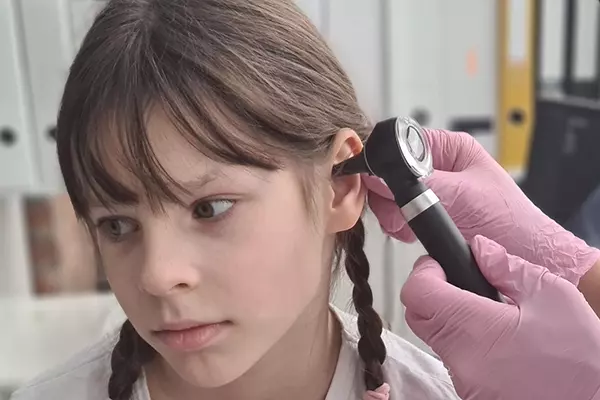
Also known as “glue ear,” otitis media with effusion is a build-up of fluid in the middle ear without signs of active infection. It is one of the most common childhood ear conditions, and one of the most treatable. Surgeons at ENT Specialists Group offer Glue Ear treatment for children and adults.

Medically reviewed by Dr Yi Chen Zhao, FRACS, ENT Surgeon
Last reviewed 20 August 2026.
What is Otitis Media with Effusion?
Otitis media with effusion (OME) — commonly called glue ear — occurs when non-infectious fluid accumulates in the middle ear space, behind an intact eardrum. Unlike acute otitis media, there is no fever, severe pain, or pus. The condition is extremely common: up to 80% of children will experience at least one episode by the time they start school.
The fluid causes the eardrum and the tiny ossicles (bones) of the middle ear to vibrate less freely, resulting in a conductive hearing loss. When OME is prolonged or recurrent, this hearing loss can interfere with speech development, learning, and quality of life in young children.
Adults can also develop OME, often in association with Eustachian tube dysfunction, allergic rhinitis, or following an upper respiratory tract infection.
Contact Us
467 Upper Heidelberg Road,
Heidelberg Heights, VIC 3081
03 9998 7459
Recognising Glue Ear
OME is often described as a “silent” condition because, unlike acute ear infections, it is usually painless. Symptoms can be subtle and may only be noticed by parents or teachers. Look out for:
Hearing Difficulty
Frequently asking for things to be repeated; mishearing words; turning the TV up loud.
Speech Delays
In young children, hearing loss from OME can slow speech and language development.
Learning or Attention Issues
Difficulty following instructions at school or appearing inattentive in class.
Ear Fullness
A sensation of pressure or blockage in the ear; older children and adults may describe this clearly.
Tinnitus
Ringing, buzzing, or humming sounds in the affected ear.
Balance Problems
Occasionally, fluid in the middle ear can affect balance and coordination, particularly in young children.
When to seek medical advice
If your child shows any signs of hearing loss, delayed speech, or recurrent ear trouble, an early assessment by an ENT specialist is recommended — even if there is no pain or fever.
What Causes Otitis Media with Effusion?
OME develops when the Eustachian tube — the narrow channel linking the middle ear to the back of the throat — does not open and close properly, preventing normal drainage and ventilation of the middle ear space. Several factors can impair this function:
Eustachian Tube Dysfunction
In young children the tube is shorter and more horizontal, making it inherently more prone to blockage and poor drainage.
Upper Respiratory Infections
Colds, flu, and other viral infections cause mucosal swelling that can obstruct the Eustachian tube opening.
Enlarged Adenoids
Adenoid tissue sits near the Eustachian tube opening. When enlarged, it can physically block drainage of the middle ear.
Allergic Rhinitis
Nasal allergy causes mucosal oedema and increased mucus production, both of which impair Eustachian tube function.
Passive Smoke Exposure
Children exposed to tobacco smoke have higher rates of OME due to ciliary dysfunction and mucosal irritation.
Cleft Palate
Structural abnormalities affecting the soft palate muscles impair the Eustachian tube’s ability to open properly.
Nasopharyngeal Mass
In adults, a persistent unilateral OME warrants investigation to exclude a nasopharyngeal lesion obstructing the tube.
Daycare & Group Settings
Greater exposure to respiratory viruses in group childcare settings increases the frequency of episodes.
A Common Challenge for Young Children
OME is the leading cause of hearing loss in children and the most frequent reason for referral to an ENT specialist in the paediatric age group. Because children cannot always articulate that they are hearing poorly, parents and educators play a crucial role in early identification. If you have any concerns about your child’s hearing, our team is here to help.
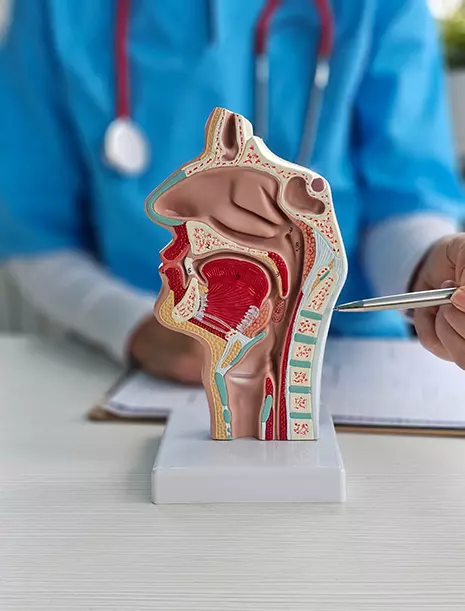
How Is Glue Ear Diagnosed?
Diagnosis of OME is straightforward when the right assessments are performed. Your ENT specialist will typically carry out the following:
Otoscopy (Ear Examination)
The eardrum is examined directly using an otoscope or microscope. In OME, the drum typically appears dull, amber, or grey, and may show visible fluid levels or air bubbles behind it.
Pure Tone Audiometry or Behavioural Hearing Tests
Formal hearing tests quantify the degree of hearing loss. In young children, play audiometry or visual reinforcement audiometry are used. Older children and adults undergo conventional pure tone audiometry.
Allergy Assessment
Where allergic rhinitis is thought to be contributing, skin prick testing or RAST blood tests may be recommended to identify relevant allergens and guide treatment.
Tympanometry
A small probe placed at the entrance of the ear canal measures how well the eardrum moves in response to changing air pressure. A “flat” (Type B) trace is characteristic of fluid in the middle ear.
Nasal Endoscopy (Selected Cases)
If enlarged adenoids or another nasopharyngeal cause is suspected, a thin flexible scope may be passed through the nose to visualise the area around the Eustachian tube opening.
Treatment Options
The right treatment depends on how long the fluid has been present, the severity of any hearing loss, the child’s age and developmental needs, and whether there are contributing factors such as allergy. Many cases of OME resolve on their own; others require active intervention.
Watchful Waiting
For most children with uncomplicated OME, a period of 3 months of observation is recommended before considering intervention. The majority of cases resolve spontaneously during this time.
Suitable for mild, unilateral, or asymptomatic OME
Regular hearing and tympanometry re-checks
Parental and teacher awareness during this period
Medical Management
Medications do not directly remove middle ear fluid but can address underlying contributing conditions.
Intranasal corticosteroid sprays for coexisting allergic rhinitis
Antihistamines if allergic disease is a primary driver
Antibiotics are not routinely recommended (OME is not bacterial)
Treatment of underlying rhinosinusitis if present
Hearing Aids
In some children — particularly where surgery is not yet appropriate or where parents prefer a non-surgical approach — a hearing aid can effectively amplify sound and support language development during the period of hearing loss.
Good option for children with mild-to-moderate bilateral OME
Reversible and non-invasive
Requires fitting by an audiologist
Grommets (Ventilation Tubes)
Grommet insertion is the most commonly performed paediatric surgical procedure in Australia. Under a brief general anaesthetic, a tiny ventilation tube is inserted into the eardrum, immediately restoring hearing and allowing the middle ear to air.
Recommended after 3+ months of bilateral OME with hearing loss ≥25 dB
Grommets typically remain in place 6–18 months then fall out naturally
Often combined with adenoidectomy to reduce recurrence
Adenoidectomy
Surgical removal of the adenoids is commonly performed alongside grommet insertion, particularly in children over four years of age. Removing enlarged adenoids reduces the recurrence rate of OME significantly.
Reduces the chance of grommets needing to be re-inserted
Improves nasal breathing and reduces snoring
Performed as a day procedure under general anaesthetic
Autoinflation
Autoinflation devices (such as the Otovent balloon) allow children to self-inflate their middle ear by blowing through their nose. Evidence supports a modest benefit in improving middle ear pressure and resolution of OME in cooperative children.
Non-invasive and inexpensive
Suitable for children old enough to comply (typically 3+ years)
Can be used during the watchful waiting period
Frequently Asked Questions
Generally, no. Unlike acute otitis media (a middle ear infection), OME does not typically cause severe pain or fever. Some children experience a mild sense of pressure or fullness, but many have no pain at all — which is why the hearing loss can go unnoticed for some time.
In most cases, yes. Once the fluid resolves — whether spontaneously or following treatment — hearing typically returns to normal. OME does not cause permanent hearing damage in the vast majority of children. Very rarely, prolonged OME can contribute to structural changes in the eardrum (such as a retraction pocket), which may require additional monitoring.
Yes. Adults can develop OME following a cold, a flight, or in association with allergic rhinitis or sinusitis. Importantly, a new onset of OME in one ear of an adult — especially without an obvious precipitating cause — warrants prompt assessment by an ENT specialist to exclude a nasopharyngeal lesion.
Grommet insertion is performed under a brief general anaesthetic, so children are asleep and do not feel the procedure. Recovery is rapid — most children are up and about within a few hours. Some children experience mild discomfort or ear discharge for a day or two afterwards. Grommets fall out naturally, and most children do not require a second insertion.
Routine surface swimming in clean water (pools, calm sea) is generally considered safe with grommets. Diving, submerging the head in potentially contaminated water, or swimming without earplugs in certain situations may be discouraged — your surgeon will provide specific guidance based on the type of grommet used and your child’s circumstances.
Inform your child’s teachers so they can seat your child near the front of the class and ensure they have clear line-of-sight when listening. At home, reduce background noise when speaking to your child, get their attention before speaking, and speak clearly and face-to-face. Speech pathology support may be helpful if any language delay has already occurred.
Glue ear, or otitis media with effusion, is a build-up of thick fluid behind the eardrum, without the acute pain of an ear infection. It is common in young children and often follows colds or repeated ear infections. The main effect is muffled or reduced hearing, which can affect speech and learning if it continues for some time. Many cases of glue ear clear on their own within a few months.
Grommets, which are small ventilation tubes, are usually considered when fluid stays for more than about three months and is affecting hearing, speech or schooling, or when ear infections keep recurring. The tubes let air into the middle ear and drain the fluid, which restores hearing in most children. An ENT specialist can assess the hearing and eardrum and advise whether grommets are likely to help.
Glue ear can impact children’s speech and hearing. Because glue ear muffles sound, a child may seem inattentive, turn the television up, or fall behind with speech while the fluid is present. Hearing usually returns once the fluid clears or grommets are placed. If you are concerned about your child’s hearing or speech, ask your GP or an ENT specialist for a hearing check.
Concerned about hearing loss or ear symptoms?
Our ENT specialists are here to assess, diagnose, and guide you through the most appropriate treatment pathway for you or your child.
Our ear nose and throat specialists will take the time to explain the process to you to ensure the best outcome for your little one.
Our surgeons are also members of the Australian Society of Otolaryngology Head and Neck Surgery.
If you’d like to understand more about treatment and surgical options for your child, contact us today or make an online booking.