sudden hearing loss
Sudden Sensorineural Hearing Loss
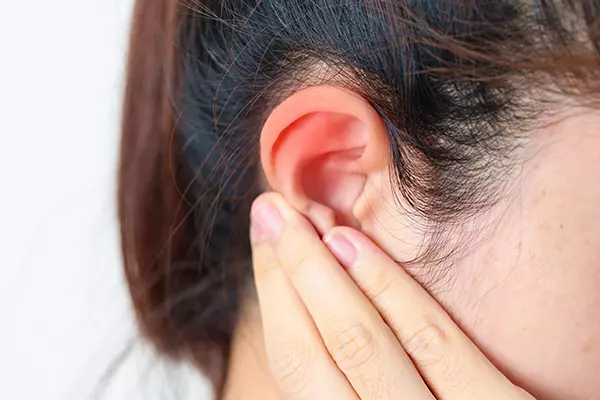
Sudden sensorineural hearing loss (SSNHL) is a rapid, unexplained loss of hearing that develops over hours to days. It is a medical emergency — early treatment gives the best chance of recovery.

Medically reviewed by Dr Yi Chen Zhao, FRACS, ENT Surgeon
Last reviewed 20 August 2026.
What is Sudden Sensorineural Hearing Loss?
Sudden sensorineural hearing loss (SSNHL) is defined as a loss of at least 30 decibels across three or more consecutive frequencies on a pure tone audiogram, occurring within 72 hours. In practice, most patients notice the hearing loss on waking, or are aware of it developing over a period of hours. It typically affects one ear only.
Unlike conductive hearing loss — which results from problems in the outer or middle ear — sensorineural hearing loss originates in the cochlea (inner ear) or the auditory nerve itself. In SSNHL, the hair cells of the cochlea or the nerve fibres that carry sound signals to the brain are suddenly disrupted, producing a hearing loss that can range from mild to profound.
In the majority of cases no definitive cause is identified, and these are classified as idiopathic SSNHL. Despite this, treatment should not be delayed while investigations are underway. SSNHL is considered a medical emergency because the window for effective treatment is time-limited — outcomes are significantly better when treatment begins within the first few days of onset.
Contact Us
467 Upper Heidelberg Road,
Heidelberg Heights, VIC 3081
03 9998 7459
Recognising SSNHL
The hallmark of SSNHL is a sudden or rapidly progressive loss of hearing, usually in one ear. It is often accompanied by one or more of the following symptoms, which should prompt urgent assessment.
Sudden Hearing Loss
A rapid, noticeable drop in hearing in one ear — often noticed on waking, or when using the phone. The loss may feel like the ear is “blocked” or “muffled.”
Tinnitus
A ringing, buzzing, hissing, or roaring sound in the affected ear frequently accompanies the hearing loss and may be the first symptom noticed.
Vertigo or Dizziness
ome patients experience a sudden episode of vertigo — a spinning sensation — at the onset of hearing loss, reflecting involvement of the vestibular (balance) component of the inner ear.
Ear Fullness
A sensation of pressure or fullness in the affected ear is common and may be mistaken for wax or fluid initially.
Imbalance
Even without frank vertigo, some patients notice unsteadiness or difficulty with balance due to inner ear involvement.
SSNHL is a medical emergency
If you notice sudden hearing loss in one ear, do not wait to see if it improves on its own. Seek assessment by an ENT specialist or present to an emergency department as soon as possible. The likelihood of recovery is significantly reduced the longer treatment is delayed.
What Causes SSNHL?
A definitive cause is identified in only a minority of cases. When no cause is found despite thorough investigation, the diagnosis is idiopathic SSNHL. The following are recognised causes and associations that are systematically evaluated during workup.
Ototoxic Medications
Certain drugs — including aminoglycoside antibiotics, platinum-based chemotherapy agents, loop diuretics, and high-dose aspirin — can damage cochlear hair cells and produce sudden or progressive sensorineural hearing loss.
Ménière’s Disease
Episodes of sudden hearing loss, fullness, tinnitus, and vertigo can occur in Ménière’s disease due to endolymphatic hydrops. Recurrent episodes affecting the same ear suggest this diagnosis.
Perilymph Fistula
A tear in the membranes separating the fluid-filled spaces of the inner ear from the middle ear — often following straining, heavy lifting, or barotrauma — can cause sudden hearing loss and vertigo.
Idiopathic (Unknown Cause)
The most common category — accounting for up to 90% of cases. A cause cannot be identified despite full investigation. The leading hypothesis is viral cochlear inflammation or microvascular disruption, though neither has been definitively proven.
Viral Infection
Several viruses are associated with SSNHL, including herpes simplex virus, varicella zoster (Ramsay Hunt syndrome), mumps, measles, and cytomegalovirus. Viral cochleitis is thought to be the most common identifiable cause.
Autoimmune Inner Ear Disease
The immune system can, in rare cases, mount an attack against cochlear structures. Autoimmune SSNHL may be bilateral and progressive and can be associated with systemic autoimmune conditions such as Cogan’s syndrome, lupus, or rheumatoid arthritis.
Vascular / Microcirculatory Disruption
The cochlea is supplied by a single end artery — the labyrinthine artery — with no collateral circulation. Spasm, thrombosis, or embolism affecting this vessel can produce sudden ischaemic hearing loss. Risk factors include cardiovascular disease, smoking, and hyperlipidaemia.
Acoustic Neuroma (Vestibular Schwannoma)
A benign tumour of the vestibulocochlear nerve can present with sudden hearing loss in a small but important proportion of cases. MRI is essential to exclude this diagnosis in all patients with SSNHL.
Time Is Hearing
The analogy to stroke medicine is apt — just as “time is brain,” time is hearing in SSNHL. The cochlear hair cells damaged in SSNHL can, in some cases, be rescued by prompt anti-inflammatory treatment, but this window of opportunity is narrow. Studies consistently show that patients treated within the first 24 to 48 hours of onset have meaningfully better rates of hearing recovery than those who present after a week or more.
Many patients initially attribute their hearing loss to wax, a blocked ear, or fluid after a cold — and delay seeking care for days or weeks. If there is any uncertainty, err on the side of urgent assessment. A blocked ear from wax is easily managed; delayed treatment of SSNHL may result in permanent hearing loss.
How Is SSNHL Investigated?
Diagnosis is confirmed with a pure tone audiogram. Investigation is then directed at identifying any underlying cause and excluding conditions that require specific management, particularly acoustic neuroma.
Clinical History and Examination
A detailed history is taken including onset, laterality, associated symptoms (tinnitus, vertigo, fullness), recent viral illness, noise exposure, medications, and any history of autoimmune disease or cardiovascular risk factors. The ear is examined to exclude conductive causes such as wax, effusion, or perforation.
MRI of the Internal Auditory Meati — Selected Cases
MRI with gadolinium contrast of the internal auditory canals is recommended to exclude an acoustic neuroma (vestibular schwannoma), which can present with SSNHL. While acoustic neuroma accounts for only a small proportion of SSNHL cases, it is a diagnosis that must not be missed. MRI is typically arranged within the first weeks of presentation.
Pure Tone Audiometry
A formal hearing test is essential to confirm the diagnosis, characterise the degree and configuration of hearing loss, and provide a baseline against which recovery can be measured. SSNHL typically shows a sensorineural pattern — with air and bone conduction thresholds equally affected — distinguishing it from conductive hearing loss.
Blood Tests — Selected Cases
Targeted blood tests may be requested to investigate for specific underlying causes, including autoimmune markers (ANA, ANCA, ESR, CRP), infectious serology (Lyme disease, syphilis, viral titres), a full blood count, and a lipid and glucose profile where vascular risk is suspected.
Treatment Options
Treatment should begin as soon as possible after onset. For idiopathic SSNHL — the large majority of cases — high-dose corticosteroids are the primary treatment. Additional therapies may be offered depending on response and individual circumstances.
Systemic Corticosteroids
High-dose oral corticosteroids — typically prednisolone — are the first-line and most evidence-backed treatment for idiopathic SSNHL. They are thought to work by reducing cochlear inflammation and oedema.
Started as early as possible — ideally within 24–72 hours of onset
A typical course runs 10–14 days with gradual tapering
Approximately 50–60% of patients experience partial or full recovery
Side effects are generally tolerable over a short course; diabetic patients require careful monitoring
Hearing Rehabilitation
For patients with residual hearing loss that does not recover sufficiently, a range of hearing rehabilitation options can significantly improve quality of life and communication.
Conventional hearing aids for mild to moderate residual loss
CROS or BiCROS hearing aids for single-sided deafness
Bone-anchored hearing implants (BAHA) for unilateral hearing loss
Cochlear implantation in cases of profound loss where aided benefit is insufficient
Rest & Avoidance of Noise
During the acute phase, patients are advised to rest and avoid exposure to loud noise, which could place additional stress on already vulnerable cochlear hair cells. Avoidance of strenuous physical activity and Valsalva manoeuvres is also recommended in cases where perilymph fistula is suspected.
Avoid loud environments, concerts, and power tools
Reduce physical and psychological stress where possible
Avoid smoking and optimise cardiovascular risk factors
Intratympanic Corticosteroid Injection
Steroid solution is injected through the eardrum into the middle ear space, where it diffuses across the round window membrane into the cochlea. This delivers a high local concentration of steroid with minimal systemic side effects.
Offered as primary treatment when systemic steroids are contraindicated
Used as salvage therapy when oral steroids have not produced adequate recovery
Performed in clinic under local anaesthetic; well tolerated
May be given as a series of injections over one to two weeks
Audiological Monitoring & Repeat Audiometry
Serial audiograms are used to track recovery over the weeks following onset. The pattern and degree of improvement guides decisions about further treatment and helps determine the final hearing outcome.
Repeat audiometry at two to four weeks post-presentation
Further testing at three months to document final outcome
Informs timing and suitability of hearing rehabilitation if needed
Treatment of Underlying Cause
Where a specific cause is identified, targeted treatment is directed accordingly. Management of the underlying condition is essential alongside corticosteroid therapy.
Antiviral therapy (e.g. valaciclovir) for Ramsay Hunt syndrome or suspected herpes viral aetiology
Immunosuppressive therapy for autoimmune inner ear disease
Surgical management if acoustic neuroma is identified
Ménière’s disease management for recurrent episodic presentations
Frequently Asked Questions
Recovery varies considerably between individuals. Roughly one-third of patients recover fully, one-third experience partial recovery, and one-third are left with significant permanent hearing loss. The most important factors influencing outcome are how quickly treatment is started, the severity of the initial hearing loss, the audiometric configuration (high-frequency losses tend to recover less well), and the presence or absence of vertigo at onset. Early, aggressive treatment gives the best possible chance of recovery.
It is never too late to be assessed, and treatment may still be beneficial even when presentation is delayed. Most guidelines support offering corticosteroid treatment up to four to six weeks after onset, particularly if there has been no prior treatment. Intratympanic steroid injection may also be offered as salvage therapy in this setting. Seek an ENT appointment as soon as possible — do not delay further.
Earwax can cause a sudden sense of hearing loss — particularly after showering when wax swells — but produces a conductive rather than sensorineural hearing loss. A clinical examination of the ear canal and a simple hearing test will quickly distinguish between the two. If wax is found and removed but hearing does not improve, a sensorineural cause must be considered and investigated promptly.
An MRI of the internal auditory canals is recommended for most patients with SSNHL to exclude an acoustic neuroma (vestibular schwannoma). Although this tumour accounts for only a small minority of SSNHL cases, it is important not to miss it, as it requires specific monitoring or treatment. MRI is the only reliable way to detect or exclude this diagnosis.
Recurrence in the same ear or development of SSNHL in the opposite ear can occur, particularly in cases related to Ménière’s disease or autoimmune inner ear disease. Bilateral sudden hearing loss — simultaneous or sequential — is uncommon and should prompt thorough investigation for systemic causes including autoimmune disease and vascular conditions. Your ENT specialist will advise on appropriate follow-up and monitoring.
While arranging urgent ENT review, avoid loud noise exposure and strenuous activity. Do not use cotton buds or attempt to clear the ear yourself. If you are a smoker, stopping smoking immediately is advisable as it may impair cochlear blood flow. If your GP is able to initiate a short course of oral prednisolone before your ENT appointment — particularly if access to specialist care is delayed — this is reasonable and may improve your chances of recovery.
Yes, sudden hearing loss should be treated as urgent. Sudden sensorineural hearing loss is a rapid drop in hearing, usually in one ear, that comes on over hours to a few days. Treatment works best when it starts early, often within the first two weeks and ideally within days. If you notice a sudden loss of hearing, see a doctor or present to an emergency department promptly rather than waiting to see if it improves.
Sudden means the hearing loss comes on fast, over a matter or minutes to a couple of days. Sensorineural indicates the problem is in the inner ear or nerve, which is more urgent than conductive loss, which is typically a physical blockage like earwax or fluid. In most cases no single cause is found, though it is often linked to viral infection or to problems with blood flow or the inner ear. It can occasionally signal another condition, which is one reason prompt assessment matters. An ENT specialist can arrange hearing tests and, where appropriate, a scan to look for a cause.
The main treatment for sudden sensorineural hearing loss is a course of steroids, given as tablets or as injections into the ear, aimed at recovering as much hearing as possible. Some people regain much of their hearing, while others recover partially. Because timing affects the result, early treatment gives the best chance. An ENT specialist will guide the approach and follow up your hearing.
Sudden hearing loss requires urgent attention.
Our ENT specialists prioritise urgent assessment for sudden hearing loss. Please call us directly for same-day or next-day review — do not delay.
Our ear nose and throat specialists will take the time to explain the process to you to ensure the best outcome for your little one.
Our surgeons are also members of the Australian Society of Otolaryngology Head and Neck Surgery.
If you’d like to understand more about treatment and surgical options for your child, contact us today or make an online booking.